
Understanding Payment Processing: What Every Business Needs to Know

Understanding payment processing is essential for any modern business. From credit card transactions and debit card payments to mobile wallets, digital wallets, and online payment systems, every transaction flows through a secure network of payment gateways, processors, merchant accounts, and card networks. A strong payment processing solution ensures fast, secure transactions, reduces cart abandonment, improves cash flow, and builds customer trust. At AGCU, we help businesses navigate the complexities of merchant services, PCI DSS compliance, fraud prevention tools, tokenization, and real-time payment trends so they can serve customers with confidence. Whether you run an e-commerce store, small business, ministry, or nonprofit, having the right business payment processing solutions empowers you to accept more payments, protect sensitive data, and keep up with evolving consumer expectations.

13 Steps to Manage Debt: Taking Back Control of Your Finances

Managing debt doesn’t have to feel overwhelming. With the right plan, you can take control of your finances, reduce high-interest balances, and build a path toward financial freedom. Our guide, 13 Steps to Manage Debt, covers everything you need to know—from creating a realistic budget and choosing the best debt payoff strategy (snowball vs. avalanche), to consolidating loans, monitoring your credit, and building an emergency fund. Whether you’re juggling credit cards, student loans, or auto loans, these practical debt management tips will help you avoid costly mistakes and stay on track. Learn how to pay down debt faster, improve your credit score, and protect your financial future with AGCU’s friendly, step-by-step advice.

Beware of Fake AGCU Alerts: How to Recognize Bank and Credit Union Text Scams

Scammers are impersonating credit unions and sending fake “AGCU Alerts” text messages to trick members into giving away personal information. Learn how to spot fraudulent texts, avoid phishing links, and protect your AGCU account from identity theft. If you ever receive a suspicious message, never click links or call unknown numbers—contact AGCU directly at 866-508-AGCU or visit agcu.org
for secure account help.

Adulting: Credit Card Smarts

Adulting 101: Credit Card Smarts

Credit Card Smarts: Adulting 101

Credit Cards: Powerful Tools, Dangerous Toys

Credit cards can help you build credit, earn rewards, and provide financial flexibility. But they can also become expensive if they’re not used wisely.

Think of a credit card like a chainsaw: incredibly useful for the right job, but capable of causing damage if handled carelessly.

Adulting Tip: The smartest credit card users treat their card like a payment tool—not a source of extra money.

10 Credit Card Habits Every Adult Should Know

1. Credit Cards Are Loans in Disguise

When you swipe your card, you’re borrowing money. If you don’t pay the balance in full, interest begins to accumulate.

2. Minimum Payments Cost More

Paying only the minimum due keeps your account current, but it can dramatically increase the total amount you repay over time.

3. Build Credit Early

Using a credit card responsibly can help establish a positive credit history that may benefit you when renting, borrowing, or applying for certain jobs.

4. Budget Like It’s Cash

Every purchase should fit within your budget. If you wouldn’t spend the money from your checking account, don’t charge it to a credit card.

5. Rewards Aren’t Free Money

Cash back and rewards are valuable only when you avoid interest charges. Carrying a balance can easily outweigh any rewards earned.

6. Read the Fine Print

Watch for annual fees, promotional rates that expire, penalty fees, and other terms before opening a new card.

7. Review Your Statements

Regularly checking your account helps you spot fraud, monitor spending, and catch mistakes before they become bigger problems.

8. Keep Utilization Low

Try to use less than 30% of your available credit limit. Lower utilization can help support a stronger credit score.

9. Build an Emergency Fund

Credit cards should not replace savings. A dedicated emergency fund provides greater financial security when unexpected expenses arise.

10. Know When to Say No

Opening multiple cards for discounts or rewards can become difficult to manage. Only apply when it supports your long-term financial goals.

Three Keys to Building Good Credit

  • Pay on time. Payment history is one of the most important factors in your credit score.
  • Keep balances low. Aim to stay below 30% of your available credit limit.
  • Use credit consistently. Responsible use over time helps build a strong credit history.

Bonus Tip: Consider Balance Transfers Carefully

If you’re carrying high-interest credit card debt, a balance transfer offer with a promotional 0% APR can provide an opportunity to pay down debt faster.

Before transferring a balance, make sure you understand:

  • How long the promotional rate lasts
  • Whether balance transfer fees apply
  • What the interest rate becomes afterward
  • Your plan to pay off the balance before the promotion ends
Remember: A balance transfer is a tool, not a solution by itself. The real goal is paying down debt and avoiding future balances.

Final Thoughts

Credit cards can be valuable financial tools when used responsibly. Good habits—paying on time, staying within your budget, and keeping balances low—can help you build strong credit and avoid unnecessary debt.

The difference between credit cards helping or hurting your financial future often comes down to a few simple decisions made consistently over time.

Ready to Put Your Credit Card Smarts to Work?

Whether you’re building credit, looking for better rewards, or simply want a card designed with members in mind, AGCU offers credit card options to fit your goals.

Explore AGCU Credit Cards and find the right fit for your financial journey.

Credit approval required. Terms, rates, and conditions may vary. Contact AGCU for current credit card options and disclosures.

Your Home Buying Timeline: What to Expect From Pre-Approval to Move-In

Looking to buy a home? Understanding the home buying process is key to a smooth real estate transaction. From mortgage pre-approval and choosing a real estate agent to making an offer, scheduling a home inspection, and closing the sale, each step helps you move closer to homeownership. Learn how to navigate mortgage approval, loan underwriting, property appraisals, and title searches to secure your dream home. AGCU’s expert mortgage team is here to guide you through every stage of buying a home in Springfield, MO, and beyond. Get started with a pre-approval today at agcuhomeloans.org.

How to transfer money with Zelle®

“`html

How to Transfer Money with Zelle®

Send Money to Friends and Family in Minutes

Zelle® makes it easy to send and receive money directly from your AGCU account using Online Banking or Mobile Banking.

Whether you’re paying a friend back for lunch, splitting expenses, or sending money to a family member, Zelle® offers a fast and convenient way to move money between eligible U.S. bank accounts. Money is typically available within minutes when both parties are enrolled.¹

Send Money with Zelle

What Is Zelle®?

Zelle® is a digital payment service built into AGCU Online Banking and Mobile Banking. Instead of using cash, checks, or third-party payment apps, you can send money directly from your AGCU account to someone else’s eligible U.S. bank account using only their email address or mobile phone number.

Important: Only send money to people you know and trust. Zelle® payments are designed for friends, family, and trusted contacts and generally cannot be canceled once the recipient is enrolled.

How to Enroll in Zelle®

Step 1

Log into AGCU Mobile Banking or Online Banking.

Step 2

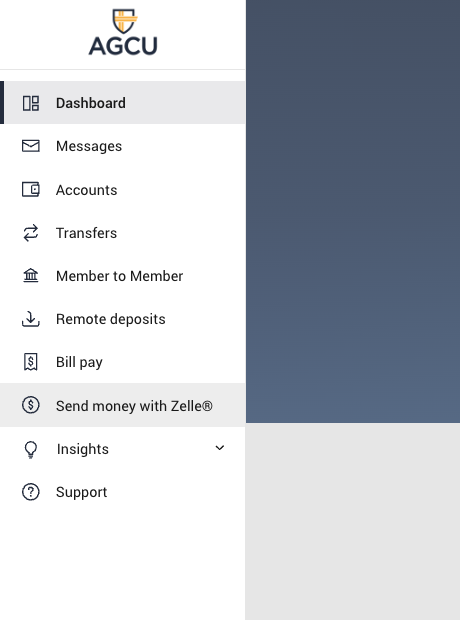
Select Transfer and Pay and then Send Money with Zelle®.

Step 3

Enroll your email address or U.S. mobile phone number.

Step 4

Start sending and receiving money.

Enroll in Zelle

How to Send Money

  1. Select Send Money with Zelle®.
  2. Choose a recipient from your contacts or enter their email address or U.S. mobile number.
  3. Enter the amount.
  4. Add an optional memo.
  5. Review and confirm the payment.

If your recipient is already enrolled with Zelle®, the money is typically available within minutes.¹


How to Receive Money

Receiving money is simple:

  • Share your enrolled email address or U.S. mobile number.
  • Ask the sender to send money using Zelle®.
  • The funds are deposited directly into your enrolled AGCU account.

If you have already enrolled, no additional action is required to receive payments.


How to Request Money

Need to collect money from a friend, roommate, or family member?

  1. Select Request inside Zelle®.
  2. Choose your recipient.
  3. Enter the amount requested.
  4. Add an optional note.
  5. Send the request.

Your recipient will receive a notification and can send payment directly through their participating financial institution.


Using Zelle® QR Codes

Zelle® QR Codes allow you to send money without typing an email address or phone number.

  • Open Zelle® within Online Banking or Mobile Banking.
  • Select the QR Code icon.
  • Scan the recipient’s QR Code.
  • Verify the recipient.
  • Enter the amount and send.

QR Codes help reduce the risk of sending money to the wrong person.


Zelle® Limits at AGCU

Limit Type Amount
Per Transaction $500
Daily Limit $500
Weekly Limit $600
Monthly Limit $2,400

Transaction limits may change over time. Contact Member Care for current limits.


Frequently Asked Questions

Are there fees to use Zelle®?

Most consumers can send and receive money with Zelle® without paying a fee.²

Can I cancel a payment?

You can only cancel a payment if the recipient has not yet enrolled with Zelle®. Once an enrolled recipient receives the funds, the payment generally cannot be reversed.

Can I use Zelle® internationally?

No. Both the sender and recipient must have eligible U.S. bank accounts.

What does the purple “Z” mean?

The purple “Z” indicates a contact who is already enrolled with Zelle®.

What if my phone number is already enrolled elsewhere?

If your email address or mobile number is already associated with another financial institution’s Zelle® profile, contact Member Care for assistance moving it to AGCU.


Send Money with Confidence

Zelle® offers a convenient way to send money directly from your AGCU account without sharing account numbers.

Whether you’re paying a friend back, splitting expenses, or sending money to family, Zelle® helps you move money quickly and securely.

¹ Transactions between enrolled users typically occur within minutes.
² Check with AGCU for any applicable account or service fees.

“`

2025 Scholarship Recipients

Congratulations to the recipients of our 2025 AGCU Scholarships!

Winners were announced Thursday, June 19 at the Annual Business Meeting held at Central Assembly. Every year we award scholarships to a number of Youth Account Members who are graduating from high school and plan to attend an accredited college or university in the fall of their graduation year. It’s just our way of thanking our youth account members who have chosen AGCU as their banking institution. If you would like to learn if you or a loved one qualify for an AGCU Scholarship, contact your local branch!

Javan Brown

Javan Brown

$3000 Scholarship
Javan is graduating from Trivium Preparatory Academy in Goodyear, Arizona, and plans to attend Barrett, The Honors College at Arizona State University as a Finance major. Javan volunteers at Mercy House Community Center and regularly helps organize food drives, back-to-school supply distribution and Christmas toy drives. He serves on the tech team and student ministries team at his church, as well as playing keyboard for the Youth Worship Team.

Jonathan Buck

Jonathan Buck

$3000 Scholarship
Jonathan is graduating from Allendale Academy in Clearwater, FL, and plans to attend Embry-Riddle Aeronautical University in Daytona Beach, FL as an Engineering Technology major.Since studying via distance learning overseas as a missionary, he has been unable to participate in school activities like most Americans. However, he was able to take part in several sports clubs like swimming, rollerblading, Krav Maga and archery. He has also taken piano lessons since 2012. Jonathan volunteers at Gospel Vision, an international ministry by creating Reels, Shorts and TikToks from weekly services and TV programs to post on social media.

Micah Hufman

Micah Hufman

$3000 Scholarship
Micah is graduating from Hillcrest High School in Springfield, Missouri, and plans to attend Ozark Technical College and study to be an aviation technician. He has been on the Varsity Soccer and Archery Golf teams throughout his high school career, as well as, participated in FFA, 4-H and JROTC while holding placement on the Honor Roll. Micah received the Military Order of the Purple Heart National Leadership Award in 2022 along with multiple other awards and achievements. He volunteers at Grant Beach Sports Association and his church. Micah is on several teams at church, including Media Team, Kids’ Ministry, Prayer Team and Events Team.

Carter McDaniel

Carter McDaniel

$3000 Scholarship
Carter is graduating from McDaniel Academy that he attends from his home in Springfield, MO and plans to attend Evangel University as a business major. He has participated in Classical Christian Academy Speech & Debate for the past 4 years and been part of the Lighthouse Chargers Baseball team. He is a tech volunteer at his church where he is active in the youth group and serves in the kids’ ministry in various roles. Additionally, he volunteers at community events for Convoy of Hope

Grace Whalen

Grace Whalen

$3000 Scholarship
Grace is graduating from New Covenant Academy in Springfield, Missouri, and plans to attend Southwest Baptist University to study nursing. There she has been on the volleyball team and part of the cheerleading squad. She was inducted into the National Honors Society in 2024. She has also served as the Student Council Art Commissioner at New Covenant Academy. She has helped at Nixa Community Center in her spare time as a volleyball coach and referee, as well as assisting teachers with tutoring elementary students in the A+ Program.

Flinton Evans

Flinton Evans

$1,000 Merrell K. Cooper Memorial Scholarship
Flinton is graduating from Logan-Rogersville High School in Rogersville, Missouri, and plans to attend Missouri State University as a criminal justice major. He is a member of the high school concert band and marching band. He has also competed on the trapshooting team at the varsity level. He is also Vice President of the Rogersville National Honors Society Chapter. He is involved with his church youth group and volunteers at the Least of These Food Pantry in Ozark, MO.

Robocalls: What You Need to Know (and How to Stop Them)

Robocalls: What You Need to Know

How to recognize suspicious calls, reduce unwanted interruptions, and protect your information.

Robocalls have become a persistent and disruptive part of everyday life. Some are legitimate, such as appointment reminders or school notifications, but many are scams designed to steal personal information or money.

Knowing how robocalls work can help you avoid becoming a victim and protect your financial security.

Robocalls: What You Need to Know

Why Robocalls Can Be Dangerous

Robocalls are dangerous because they often serve as the first step in fraud, identity theft, or financial scams. Scammers may impersonate government agencies, financial institutions, or well-known companies to pressure people into sharing sensitive information. Even answering a robocall can confirm that your number is active, which may lead to more unwanted calls. Pressing a button, speaking to the caller, or following instructions can increase your risk.

Quick Safety Rule

If you do not recognize the number, let it go to voicemail. If the call is legitimate, the caller can leave a message.

How to Spot a Robocall

Robocalls can be sneaky, but there are warning signs that can help you recognize a suspicious call before you engage.
  • Pre-recorded messages that begin as soon as the call connects
  • Caller ID spoofing, where the number looks local or familiar
  • Urgent threats, including legal action or arrest warnings
  • Unsolicited offers that sound too good to be true
  • Requests for Social Security numbers, passwords, or account information
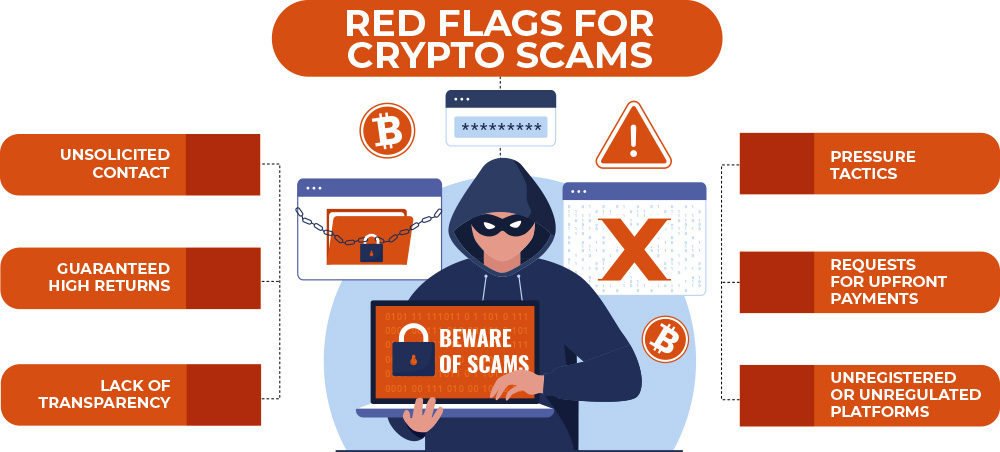
  • Demands for payment by gift card, wire transfer, or cryptocurrency
  • Pressure to act immediately or avoid asking questions
Spotting even one of these red flags is a good reason to hang up and verify the information independently.

How to Avoid Robocall Scams

The best protection is a combination of awareness and prevention. Avoid answering unfamiliar numbers whenever possible. If you do answer, do not provide information, press buttons, or follow instructions from the call.

Do

  • Let unknown calls go to voicemail
  • Verify suspicious claims directly
  • Use call-blocking tools
  • Report scam calls when possible

Do Not

  • Press numbers to “be removed”
  • Share personal information
  • Send money after an unexpected call
  • Trust caller ID alone

How to Reduce Robocalls

Register with the National Do Not Call Registry

Add your phone number to the National Do Not Call Registry at donotcall.gov.

Use Call-Blocking Tools

Many phone carriers and smartphones offer built-in call-blocking or spam-filtering tools. You may also consider reputable call-blocking apps.

Know Useful Phone Codes

  • *67 — Blocks your number so caller ID shows “Private”
  • *61 — Blocks the last call on some landline services
  • *82 — Unblocks caller ID if you previously hid your number
If you are receiving dozens of robocalls daily, changing your number may help, but it is usually a last resort.

What to Do If You Think You’ve Been Scammed

If you believe you have fallen victim to a robocall scam, act quickly but stay calm.
  1. Hang up immediately.
  2. Contact your bank or credit union if you shared financial information.
  3. Check your accounts for unauthorized transactions.
  4. Report the scam to the FTC at ReportFraud.ftc.gov.
  5. Report unwanted robocalls to the FCC at consumercomplaints.fcc.gov.
  6. Warn friends and family so they can stay alert.

Protect Your Identity. Protect Your Finances.

At AGCU, we care about your financial security. If you believe your personal or financial information has been compromised, contact us right away.

We can help you take steps to secure your accounts and protect your information.

Robocall FAQ

Can a robocall hack your phone?

Not directly. However, if you follow instructions from a scammer, download an app, or visit a malicious website, you could expose your device to malware or data theft.

What if I say “yes” during a robocall?

Scammers may record your voice and attempt to misuse it. Avoid answering suspicious calls with personal affirmations or account information.

Why am I suddenly getting so many robocalls?

It could be due to leaked data, caller ID spoofing, or a recycled phone number with a history of scam calls.

Can someone track me with my phone number?

Not easily, but scammers may collect public information connected to your number and use it in social engineering attempts.

Should I answer or ignore robocalls?

Ignore calls from unknown numbers when possible. If the caller is legitimate, they can leave a voicemail.

Should I press a number to stop the calls?

No. Pressing a number can confirm your phone number is active and may lead to more unwanted calls.

Final Thought

Robocalls are more than annoying—they can be dangerous.

Stay cautious, avoid engaging with suspicious calls, and verify unexpected requests through trusted channels before sharing information or sending money.