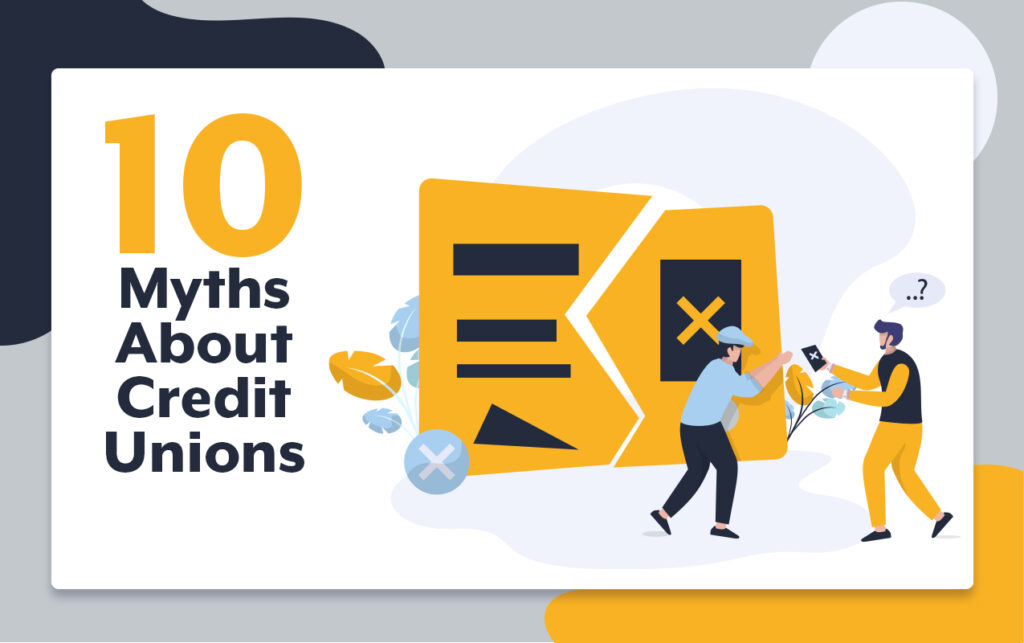

Your Complete Guide to Secure Mobile Banking

Your Complete Guide to Secure Mobile Banking

Your Complete Guide to Secure Mobile Banking
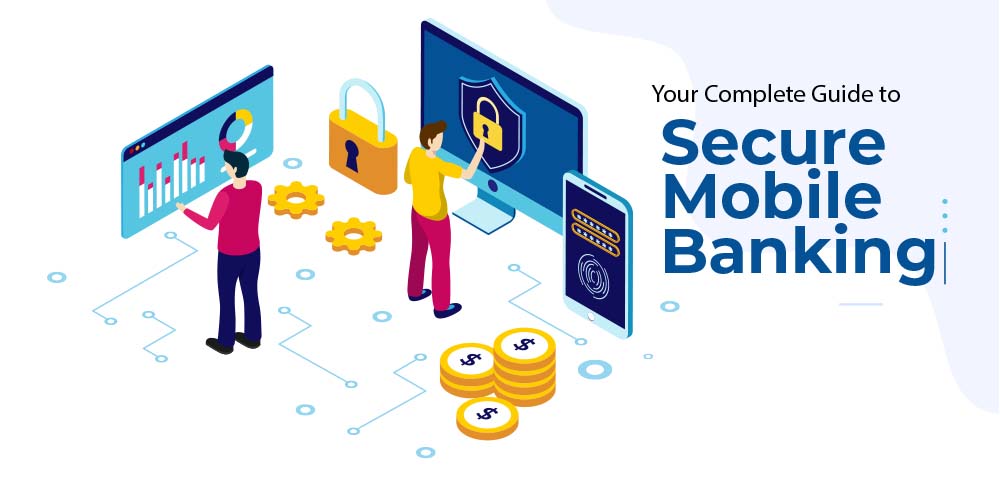
 

In response to the rise of mobile banking scams, the Consumer Financial Protection Bureau (CFPB) recently published new guidance on unauthorized electronic funds transfers or EFTs. With more people using electronic banking as a holdover from pandemic times, consumers need to be aware of its vulnerabilities and protect themselves from scams. Here’s what you need to know about the risks of mobile banking and how to stay safe.


What are the risks of mobile banking?

Banking through your mobile device is quick, convenient, and efficient. There’s no longer a need to stop by the credit union on your way home from work to deposit checks, make a transfer or review your recent account history. Most banks and credit unions now allow you to do all that and more at any time and from anywhere, using your phone and a mobile banking app. To get started, simply download the free Mobile Banking app from the App Store or Google Play store.

Unfortunately, though, like all transactions over the internet, mobile banking has some inherent risks. First, hackers can break into a phone and an account to steal money and information. Also, phishing scams targeting people over the phone can trick them into sharing login information with scammers who may hack into the account. Finally, bogus emails and messages appearing to be from your credit union can lead you to install malware on your device unknowingly.

Mobile banking scams can be difficult to spot and are frighteningly prevalent. In fact, according to a report by data science company Feedzai, the first quarter of 2021 saw a 159% increase in banking scams over the last quarter of 2020. This is likely because the volume of banking transactions is returning to its pre-pandemic norm, and many of them are happening online.

How to bank safely online

Instances of online fraud may be mounting, but that doesn’t mean you need to give up the convenience of mobile banking. Follow these protocols for online safety and bank with high confidence:

  • Use a VPN to hide your IP address. A VPN (virtual private network) will give you a private network, even when you’re using public Wi-Fi, thus preventing scammers from tracking and hacking your mobile device. It’s important to note that some VPNs can work so well that your own credit union won’t recognize you, so be sure to choose one that provides each user with a designated proxy IP. This enables select accounts to recognize the user while providing protection from hackers.
  • Always choose multi-factor authentication. Most money apps will require this, but if your chosen app allows you to make this choice, be sure to say yes to multi-factor authentication.
  • Never share your password or save it to your device. All of your passwords should be confidential, but the password you choose for an online banking app must be top secret. Don’t share your password with anyone. Follow suggested guidelines for choosing a strong password, including alternating between uppercase letters, lowercase letters, numbers, and symbols, and choosing a unique password you don’t use elsewhere. Also, choose a security question that cannot be answered by searching through the personal information you post on your social media platforms.
  • Brush up on your knowledge of scams. It’s important to keep yourself updated on the latest banking scams and know how to recognize a scam if you’re targeted. Never answer a text or email that asks for your account details, even if it appears to be from your credit union. Maps will never ask for account details, passwords, or access codes. Finally, always be wary of unsolicited phone calls and banking alerts.
  • Protect your phone. With the wealth of sensitive information it holds, a smartphone should be protected just like a desktop and laptop computer. Consider installing an antivirus app on your phone as well as a location-tracking app so you can find your phone if it gets lost. Be sure to lock your phone after using it, log out of the mobile banking app when you are done, and always keep your phone in a safe place.

Mobile banking scams are on the rise, but by simply following the tips shared above, you can use your phone to bank with confidence, knowing your money and your information are safe.


Banking With A Purpose

Much more than a catchphrase, our tagline is our passion, our reason why we do what we do. This is the impact of your membership with AGCU. Learn More About Banking with a Purpose

Like us on Facebook!

Why We Urge You To Oppose A New IRS Reporting Proposal

Why We Urge You To Oppose A New IRS Reporting Proposal


As many of you have heard, Congress has been considering a proposal that would require credit unions and other financial institutions to report to the Internal Revenue Service (IRS) how much money has gone into and out of many members’ accounts above a certain threshold.

At AGCU, we care about your privacy and are committed to informing you when legislation is being discussed that could directly affect you. We are strongly opposed to the following proposal and while this is not currently in effect, we highly encourage you to join us in sharing your voice to reject this new IRS reporting provision.

As your credit union, this unprecedented access raises several concerns:

Your Privacy Matters to Us- Oppose IRS Reporting

  • This proposal would violate consumers’ personal privacy by forcing credit unions and banks to provide the government with information that does not reflect taxable activity.
  • The government relies on old data systems to store and secure IRS information. These systems have already been compromised in recent years, and the addition of this type of data only increases the likelihood of a future breach.
  • This proposal could create an undue regulatory burden on some financial institutions.

While AGCU must abide by all federal regulations, we know your financial privacy is of utmost importance. As a member of AGCU, we encourage you to contact your US Senator and US Representative to voice your opposition today. Your voice matters!

We need to work together to stop the proposed provision that allows the IRS to access nontaxable deposit account information from credit unions and banks.

Tell your Representatives to oppose jeopardizing consumers’ personal finance privacy. Click Here To Take Action Now!

The Bottom Line:

Don’t jeopardize consumers’ personal financial privacy by allowing the IRS to access nontaxable deposit account information from credit unions and banks. 


Banking With A Purpose

Much more than a catchphrase, our tagline is our passion, our reason why we do what we do. This is the impact of your membership with AGCU. Learn More About Banking with a Purpose

Like us on Facebook!

Crushing Debt: Snowball vs. Avalanche Method

Crushing Debt: Snowball vs. Avalanche Method

Two popular debt payoff strategies — and how to choose the one that fits you best.

When it comes to tackling debt, there’s no one-size-fits-all solution. Two of the most popular strategies are the Snowball Method and the Avalanche Method. Both can work, but each one takes a different approach.

The best method for you depends on your goals, your motivation style, and how you stay encouraged along the way.

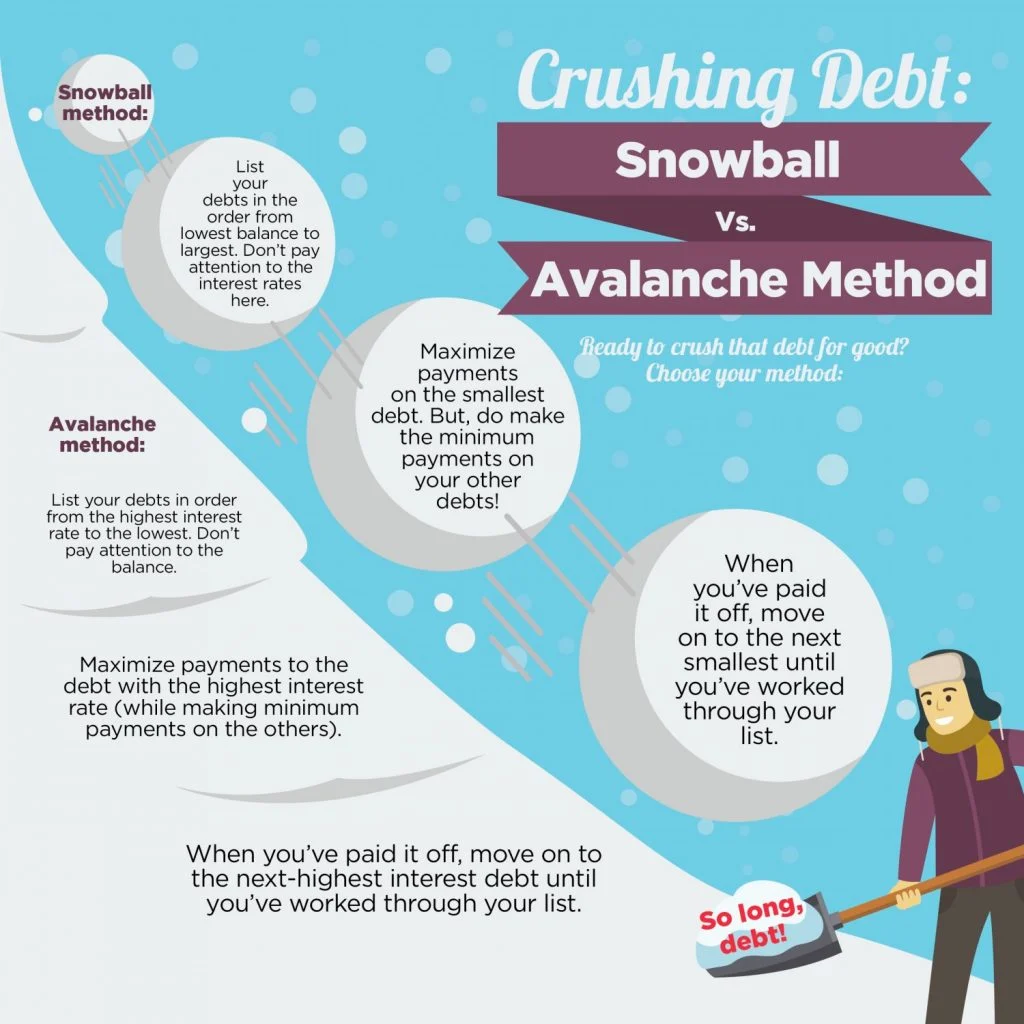
Debt Snowball vs Avalanche Method Infographic

The Snowball Method focuses on paying off the smallest balances first, while the Avalanche Method targets the highest interest rates first.

Quick Takeaway

If you need motivation and quick wins, the Snowball Method may be a great fit. If your goal is to minimize interest costs and maximize efficiency, the Avalanche Method may help you save more money over time. The best strategy is the one you can consistently follow.

What Is the Snowball Method?

The Snowball Method focuses on paying off your smallest debt first, regardless of interest rate, while making minimum payments on all other accounts.

Once the smallest debt is paid off, you roll that payment into the next smallest balance. Over time, your payments “snowball,” helping you build momentum as you go.

Best for:

People who are motivated by quick wins and need visible progress to stay encouraged.

How the Snowball Method Works

  1. List your debts from smallest balance to largest balance.
  2. Make minimum payments on every debt.
  3. Put extra money toward the smallest balance.
  4. Once it’s paid off, apply that payment to the next smallest debt.
  5. Repeat until each debt is paid off.

The Snowball Method may not always save the most money in interest, but it can help build confidence and consistency.

What Is the Avalanche Method?

The Avalanche Method focuses on paying off the debt with the highest interest rate first, regardless of balance.

This approach is more mathematical and may save you the most money over time because it reduces high-interest debt faster.

Best for:

People who are focused on reducing interest costs and want the most financially efficient payoff strategy.

How the Avalanche Method Works

  1. List your debts by interest rate, from highest to lowest.
  2. Make minimum payments on every debt.
  3. Put extra money toward the highest-interest debt.
  4. Once it’s paid off, move to the next highest-interest debt.
  5. Repeat until each debt is paid off.

The Avalanche Method can be powerful, but it may take longer to feel progress if your highest-interest debt also has a large balance.

Snowball vs. Avalanche: Which Should You Choose?

When comparing the Snowball Method and Avalanche Method, it often comes down to psychology versus math.

Snowball Method Avalanche Method
Pays off smallest balances first Pays off highest interest rates first
Creates quick wins May save more money over time
Great for motivation Great for interest savings
May cost more in interest May take longer to feel progress

The Possible Downside of the Avalanche Method

The Avalanche Method can save money, but it may feel slow at first. If your highest-interest debt is also one of your largest balances, it could take a while before you pay off your first account.

That delay can be discouraging for some people. If motivation is your biggest challenge, the Snowball Method may help you stay committed longer.

Either Method Is Better Than Doing Nothing

The best debt payoff method is the one you will actually follow.

If quick progress keeps you motivated, choose the Snowball Method. If saving on interest is your top priority, choose the Avalanche Method. Either way, having a plan is the first step toward taking back control.

Need Help Choosing a Strategy?

Debt can feel overwhelming, but you don’t have to figure it out all at once. Start by listing what you owe, choosing a payoff method, and looking for tools that may help simplify your plan.

Depending on your situation, options may include:

  • Debt consolidation loans to simplify payments
  • Low-rate credit cards to reduce interest costs
  • Budgeting tools through online banking
  • Automatic transfers or scheduled payments to stay consistent

Frequently Asked Questions

Which method pays off debt faster?

The Avalanche Method may pay debt off faster in terms of total interest saved, but the Snowball Method may help some people stay motivated long enough to finish.

Which method saves the most money?

The Avalanche Method usually saves the most money because it targets the highest-interest debt first.

Which method is better for motivation?

The Snowball Method is often better for motivation because it creates quick wins by paying off smaller balances first.

Can I combine both methods?

Yes. Some people start with the Snowball Method to build momentum, then switch to the Avalanche Method once they feel more confident.

Should I still save while paying off debt?

It can be helpful to build a small emergency fund while paying down debt so unexpected expenses don’t push you further behind.

Final Thought

The key to success is not choosing the perfect method. It’s choosing a method and starting.

Whether you use the Snowball Method, the Avalanche Method, or a mix of both, staying intentional and consistent can help you move toward a debt-free future.

10 Myths About Credit Unions

10 Myths About Credit Unions

Did you know more than 112 million Americans use credit unions? While credit unions continue to gain popularity, persistent myths prevent some people from making the switch. Here’s a look at the ten most common misconceptions and the answers that debunk them

10 Myths About Credit Unions

How much do you know about credit unions? Test yourself on these 10 myths:

Myth #1: You must meet strict eligibility requirements.

Fact: While credit unions do require that members meet certain requirements to satisfy a common bond, many of these are broad, and few of them truly limit membership.

There are many ways to qualify for membership with AGCU.

Myth #2: Getting to the ATM is difficult because my branch isn’t nearby.

Fact: With over 5000 Shared Branches and 30,000 free ATMs available, availability is not an issue.  In fact, credit unions offer more ATM access than most of the biggest national banks. Click here to find a location near you!

Myth #3: Changing my banking from a traditional bank to AGCU will be a hassle.

Fact: AGCU offers the same services as banks, including automatic bill payments and direct deposit. Most services will transition easily and go uninterrupted.

Myth #4: With all the fancy advertising, banks must have more money than credit unions.

Fact: While this may be true, it’s because credit unions are not-for-profit organizations. Rather than spend money on advertising and marketing, credit unions rely on the community for marketing. The money saved is rolled back into services for members or distributed back to members as dividends.

Myth #5: Credit unions don’t offer reward programs.

Fact: Many credit unions do offer reward programs on credit and debit cards. Do the research and be sure to take a look at the fees that are associated with the various accounts, even those offering rewards. At a credit union, you’ll save on fees. Do your bank rewards outweigh the fees you’re paying on each account?

Myth #6: Credit unions aren’t very tech-savvy.

Fact: AGCU doesn’t promote mobile options as aggressively as banks, but that doesn’t mean we don’t offer them. According to a study by CFI Group, bank customers rated their satisfaction at 86 out of 100 in online and mobile banking versus 90 out of 100 among credit union members.

Myth #7: Credit unions are just like banks.

Fact: Credit unions are not just like banks. Members own a piece of the organization and own a vote in determining how the credit union is managed. AGCU also returns more earnings back to members with our low fees and great dividend rates.

The more you use AGCU for your day-to-day banking needs, the more you help support worthy causes – both locally and worldwide. We donate 10% of our annual earnings to support churches and ministries, educational scholarships and programs, and humanitarian efforts.

Myth #8: Credit unions have an unfair advantage over banks because they don’t pay taxes.

Fact: Actually, credit unions do pay taxes. As a not-for-profit, member-owned financial cooperative, there are some taxes that credit unions don’t pay. Those “unfair advantages,” of course, are passed on to members.

Myth #9: Credit unions are not regulated.

Fact: Credit unions are held to the same laws and regulations as banks. In fact, credit unions face more restrictions on the investments and loans they make.

Myth #10: Credit unions are good places to save money, but that’s about it.

Fact: Credit unions offer consumer loans, debit and credit card services, online banking and bill pay, checking accounts, retirement investments, mortgages, car loans, and more. They are a great place to take care of all your banking needs.

AGCU is proud to have again earned Bauer Financial, Inc.’s highest rating for strength and stability among all financial institutions.

The 5-star rating denotes the absolute highest level of banking performance from the nation’s leading independent bank rating firm. This 5-star rating puts AGCU in an elite category as one of the strongest financial institutions in the nation.

Banking With A Purpose

Much more than a catchphrase, our tagline is our passion, our reason why we do what we do. This is the impact of your membership with AGCU. Learn More About Banking with a Purpose

9 Steps to Buying your First Car

9 Steps To Buying Your First Car

9 Steps To Buying Your First Car


Congrats—you’re ready to purchase your first real car!

There are many, many pitfalls when buying a new car. If you are a first-time car buyer, it can be daunting when you don’t know what to expect, so let AGCU walk you through the process. Follow our guidelines for a stress-free ride!


Jump To:


1. Determine If You Really Need a Car

You may not have expected this, but it’s important to make a realistic assessment of your actual transportation needs. Most college towns already have a great public transportation system in place, which can save you a lot on personal auto costs. If you have a generous car-owning friend you’ll be riding into town with each weekend, it may not be worthwhile for you to have your own set of wheels. Also, if your campus has everything you need within walking distance, it may be cheaper to rent a car when you actually need one instead of owning one.


2. Know Your Budget

If you’ve determined that a car purchase is necessary at this point in your life, don’t start hunting for your dream car until you’ve worked out a realistic budget. Take a hard look at your other monthly expenses to see how much you can spare for a new set of wheels. Don’t forget to include some cash for auto insurance, gas, and maintenance.


3. Create a Tentative Wish List

Creating a list may seem obvious but you shouldn’t go out to any car dealership and start shopping.

This is your first car, so it doesn’t need to have all the bells and whistles like in your dreams. Sit down and make a list of all the “must haves” versus “wants”  in a vehicle. Determine how much each car feature would cost you and decide which ones are really important.


4. Obtain Financing

If you’ve been saving up for your first car, you’re a smart cookie! If you don’t quite have all the money you need to buy your car, you can take out an auto loan. Check out AGCU to learn about your auto loan options and find out how much we can pre-approve you for.  This will help in your car selection and shopping process.

Do you have questions about our vehicle loans? Want to know about the application process? Contact us for more information or to schedule an appointment with a loan officer.

Curious about our rates?  View current loan rates here.

If you’re ready to apply, start your application now.


5. Research Your Options

You want a vehicle that will satisfy your needs and wants. You can research new and used car values and obtain vehicle ratings on sites, like Kelley Blue Book.  Create another list of your top three choices of car makes and models.


6.  Look Up Listings

Start searching for specific listings of your desired vehicles online and around your neighborhood. Once you’ve found several potential cars, research their histories on Carfax.com and then contact the seller to set up a test drive.


7.  Take It For a Test Spin

If a car checks out and everything looks good, you might want to take it for a test drive. Pay attention to details like legroom, acceleration, brake functionality, and more while you drive.


8. Have It Inspected

If you’re purchasing a used vehicle, it’s best to have it inspected by a mechanic before buying. Be sure to contact a reliable, local mechanic to thoroughly inspect the car and make sure it’s in working condition and safe to drive.


9. Make It Official

If your car passed the test drive and inspection, you’re ready to make it official! Be sure to read all documents before signing and obtain insurance before your first joyride.

Interested in an AGCU Insurance Quote?
Save Time And Money on Insurance AGCU Insurance

If you live in Arkansas, Kansas, Missouri, Oklahoma or Texas, you can contact Sherrie and Dee today to obtain a quote!
Phone: 866-508-2428 or 417-447-9356
Email: insurance@agcu.org
If you live outside of those five states, visit the AGCU Insurance website or call 866-397-4086 for more information.

Enjoy your new set of wheels and drive safely!

Banking With A Purpose

Much more than a catchphrase, our tagline is our passion, our reason why we do what we do. This is the impact of your membership with AGCU. Learn More About Banking with a Purpose

AGCU at GC21

AGCU Team Visits Assemblies of God 59th General Council

Executive Presbytery of the Assemblies of God elected at 59th General Council

AGCU is excited to welcome the 21-member Executive Presbytery of the Assemblies of God elected by General Council voters Aug. 5.
Congratulations on your re-election Douglas E. Clay! The general superintendent received 82.5% of the votes cast, 1,386 out of 1,714 total. General Treasurer Wilfredo “Choco” De Jesús and U.S. Missions Executive Director Malcolm P. Burleigh will also continue serving in their posts.
We’re so proud of the dedication and hard work the members of the EP have demonstrated throughout their careers, and we look forward to the direction their leadership is bringing to the Assemblies of God

Learn about all of the big news and exciting events happening at GC21 here

The AGCU team is creating accounts and taking names.

Bruce, Mark, Jim, Jeff, Janora and Todd are teaming up to represent the culture and heart of AGCU at GC21

Bruce, Mark, Jim, Jeff, Janora, and Todd are teaming up to represent the culture and heart of AGCU at GC21. Events like this are a great opportunity to let our members across the globe connect with us one on one.

Professional Presence and Accessibility

AGCU logo and hanging sign

With our new logo on our hanging sign, we can be seen throughout the exhibit hall, reminding the AG of our professional presence and accessibility.

Daily Giveaways and Video Banking

Giveaways

Each day we are giving away money to one lucky individual.AGCU Video Banking In order to be a part of our giveaway, each contestant puts their contact information into a survey,
along with any questions or suggestions they may have.

That survey is then streamlined and sent to our dedicated member care team.
As they follow up with members or future members to answer their questions or pass on great ideas,
we are learning better ways to provide first-class financial services for our members.

See who the daily winners are on our Facebook page.

Video Banking

If someone wants to open an account or start a loan, tablets are on location with our video banking, allowing members to communicate face to face with one of our banking representatives


GC21 – Orlando Florida

Adherents from the U.S. Assemblies of God met at the Orange County Convention Center in Orlando, Florida, August 3-6 for the Fellowship’s 59th General Council.

The General Council is the biennial business meeting for the church, which is part of the largest Pentecostal denomination in the world, with over 69 million members. There are more than 3 million adherents in the U.S.

Business sessions at which delegates elect officers, hear reports of church ministries and adopt resolutions began at 8:30 a.m. (Eastern) Thursday, Aug. 5, and continued through Friday, Aug. 6. Delegates are comprised of licensed and ordained AG ministers who are present and registered for the convention. In addition, every General Council congregation may send one delegate to participate in business sessions.

Doug Clay, general superintendent of the U.S. Assemblies of God, delivered the keynote address at the first service of the General Council on Wednesday evening. Other highlights include J.J. Vasquez  who spoke on Friday evening, with a Night of Miracles prayer service Thursday evening.

Even before the biennial gathering officially opened Wednesday night (Aug. 4), attendees met for pre-General Council sessions and a leadership conference that began Tuesday, Aug. 3. General sessions speakers for the two-day Influence Conference included Greg Ford, pastor of One Church in Columbus, Ohio, plus Aaron Burke, pastor of Radiant Church in Tampa, Florida.

Students, parents, and sponsors participated in the National Youth Convention  at the Orange County Convention Center. Youth were involved in numerous activities, including National Fine Arts Festival, community outreach, and nightly services. The week culminated with the Fine Arts presentations and awards, Friday, Aug. 6, beginning at 7:00 p.m.

Online viewers may follow the Influence sessions, GC business, and GC and National Youth Convention services via livestream at GeneralCouncil.org. A full backstage experience will begin 30 minutes prior to each service in English and Spanish. Archived videos will be posted following the event.


Banking With A Purpose

Much more than a catchphrase, our tagline is our passion, our reason why we do what we do. This is the impact of your membership with AGCU. Learn More About Banking with a Purpose


7 Signs You’re Living Beyond Your Means

7 Signs You’re Living Beyond Your Means and How to Fix Them – Healthy Finances

Let’s take a look at seven red flags that might mean you’re living beyond your means and the steps you can take to get back on track. ­

7 signs you're living beyond your means

You’re carrying a credit card balance from month-to-month

If you have a large credit card balance and just pay the minimum each month, you could end up carrying this balance for years while paying a lot in interest. You might also be tempted to make more purchases on the card, ultimately increasing the time it takes to pay off the debt.

You might consider: Try to double down on your monthly payments and/or make one extra payment each month instead of paying just the minimum amount. If you have multiple credit cards with high-interest rates, consider transferring all your balances to one credit card with a lower interest rate.

AGCU offers a variety of personal credit cards, including Max Cash Preferred, Real Rewards, Platinum, and Secured Card. Pick the card best suited for your needs!

Avoid Living Beyond Your MeansPaying your bills gives you anxiety

Does the thought of making your monthly bill payments on time fill you with dread? Having a plan upfront can help decrease your stress and empower you to control your finances.

You might consider: Making a monthly budget, detailing your income and spending. Look for areas to cut back on “discretionary” purchases and consider ways to boost your income. Our budgeting tools are a great way to keep on target!

Log in to your Online Banking Account and select the My Finance tab to start taking control of your spending today!

You can’t save 5% of your monthly income

Putting away at least 5% of your income could help you pay for seasonal expenses like vacations, back to school, or holidays, without relying on credit.

You might consider: Trimming your expenses and restructure your budget to include at least 5% for savings. If this amount is not feasible, start with 1-2% and gradually increase each month until you can reach 5%.

You don’t have emergency or rainy-day funds

Ideally, you should have an emergency fund to cover urgent needs that you can’t anticipate. According to a recent Bankrate survey, “just 40% of Americans could pay an unexpected $1,000 expense, such as an emergency room visit or car repair, with their savings”.

You might consider: Starting to build your funds now by putting away as much as you can each month, specifically for emergencies. Consider setting up automatic recurring transfers into one of your AGCU savings accounts to help prepare now for the unexpected.

Your mortgage payment is more than 30% of your monthly income

Most financial experts agree that your monthly mortgage payment should not exceed 30% of your take-home pay.

You might consider:

  •  Finding ways to boost your income. Seek a raise at your current job, freelance for hire, or find another side job for extra cash.
  •  Spending less on another home or consider renting.
  •  Refinancing your existing loan could be an option. Call or visit your local branch to speak with an AGCU representative to explore your options. Visit our Home Loan Center to get started!

Can you afford to purchase or refinance your leased vehicle?

If the answer is no, this could spell financial trouble.

You might consider: Finding a less expensive vehicle to purchase. AGCU has lower interest rates and more flexible options than many other auto loan providers. Learn more!

Your financial decisions are influenced by your friends’ spending habits

Thanks to social media, the pressure of “keeping up with the Joneses” is stronger than ever. If you find yourself making financial decisions based on your friends’ choices, you could be spending more than you can afford.

You might consider: Not feeling compelled to live up to the expectations of others. The peace of mind you gain by taking control of your finances contributes more to your well-being in the long run.

If you’re feeling overwhelmed by your current financial situation, we might be able to help. Stop by your local branch or call 866-508-AGCU (2428) for assistance.

Banking With A Purpose

Much more than a catchphrase, our tagline is our passion, our reason why we do what we do. This is the impact of your membership with AGCU. Learn More About Banking with a Purpose
Beware Tax Season Scams

Protect yourself from tax season scams. Learn 10 warning signs of IRS impersonators, how to verify suspicious messages, and what to do if you’ve been targeted.

Your Complete Guide to Buying an RV and ATV

Your Complete Guide to Buying an RV and ATV


 Your Complete Guide to Buying an RV and ATV

If you’re ready to purchase an RV or an ATV, the number of choices to make can be overwhelming.

The price range for different vehicles is enormous, choosing between a new or used vehicle can be tricky and securing financing can be a nightmare all its own. To help you through the process, we’ve outlined the steps to take, factors to consider and general tips for purchasing an RV or an ATV. Let’s get started!

Determine your RV class and ATV type

When choosing an RV, you’ll need to decide between the three RV classes: Class A, Class B, and Class C.

  • Class A RVs are the largest and the most comfortable. Built on big-rig platforms, these are basically rolling houses. They feature full-sized couches and TVs, full bathrooms, kitchens and expandable bedrooms that can sleep up to 10 people. The price tags range from $60,000 to over a million for custom-built motorhomes.
  • Class B motorhomes, also called campervans, are a lot more modest. Built on full-size van platforms, they include scaled-down versions of the same amenities as Class A motorhomes in a more maneuverable, cheaper package. You’ll still have the kitchen and bathroom, but think postage-stamp size as opposed to full-sized rooms. At most, you can sleep three people in a Class B RV. These vehicles cost between $50,000 and $100,000.
  • Class C RVs aim for that sweet spot between the luxurious Class A and the no-frills Class B motorhomes. These start with cargo-van platforms and extend the wheelbase until it’s roughly equal to the length of a small bus. Amenities are more enhanced than those found in a Class B, but nowhere near as robust as in a Class A. These vehicles run between $60,000 and $200,000.

Determine your RV class and ATV typeIf you’re looking to purchase an ATV, you’ll first need to choose between the two main categories for these vehicles: utility and sport. Utility ATVs have larger tires, are generally easier to ride and have fewer bells and whistles than sport ATVs. As their name implies, utility ATVs are designed for work (though they still deliver a fun ride), while sport ATVs are more commonly used for recreational purposes only. Prices for each can run from as low as just a few thousand dollars to a whopping $65,000 for a luxury, fully loaded vehicle.

When choosing an ATV, it’s also important to consider factors such as weight, power, durability and speed.

Choose between new and used vehicles

Like all vehicles, new RVs will cost a pretty penny, but there are several distinct benefits to going this route. First, you’ll likely have an easier time securing financing when purchasing a new RV. You’ll also have the option of buying an extended warranty for your vehicle, which will cover any issues that may arise after the manufacturer’s warranty expires, which is generally after one or two years. Finally, you’ll have a broader range of options to choose from when buying a new RV.
On the flip side, purchasing a used RV can save you thousands of dollars and still provide all you’re looking for in a motorhome. Also, you may never recover the inflated cost of a new RV, as most will depreciate steeply during the first year of ownership, some by as much as tens of thousands of dollars. However, you may have a harder time securing financing for a used RV, be forced to pay a higher interest rate on the loan, and have limited options when shopping for your dream motorhome.
Similarly, depending on your price point, purchasing a used ATV can potentially save you hundreds, or even thousands, of dollars. However, you’ll likely have more limited options to choose from, a harder time qualifying for a loan, and be taking a gamble with the vehicle’s functionality and durability.

Secure financing

Once you’ve made up your mind about the kind of RV or ATV you’d like to purchase, you’re ready to move ahead and secure financing.
If you’re looking for a loan to help cover the cost of your dream vehicle, look no further than AGCU! Your RV or loan comes with a favorable interest rate, easy eligibility requirements, and the excellent service you’ve come to expect from our team. Apply online or contact a loan officer at 866-508-2428.

Mystery Savings - save up to 2% on your Auto LoanYou could save up to 2% on your next auto, motorcycle, RV, or watercraft loan.* This includes NEW & USED vehicles. Learn more about Mystery Savings!


Banking With A Purpose

Much more than a catchphrase, our tagline is our passion, our reason why we do what we do. This is the impact of your membership with AGCU. Learn More About Banking with a Purpose
Like us on Facebook!


*Minimum interest rate is 2.24% APR up to 72 months and 3.24% APR up to 84 months. APR = Annual Percentage Rate. The maximum loan term is 84 months. Member must be in good standing. Subject to credit approval and the credit union’s eligibility requirements. No refinancing on existing AGCU loans. Offer valid 8/2/2021 – 9/30/2021. Not valid with any other offer. See credit union for complete details.

queen city crush

AGCU is Proud to Support Queen City Crush Baseball

Queen City Crush Logo
AGCU is proud to sponsor the Queen City Crush, Greater Springfield Fellowship of Christian Athletes’ (FCA) collegiate baseball team as they seek to make disciples in Christ and lead others to do the same.

Queen City Crush players and coaches operate local sports camps where young children receive training and instruction to learn life-long understanding of what it is like to play with Christ on the field and live for Him off the field as they develop their athletic skills. The team is also making an impact globally as they travel to the Dominican Republic to share their message through missions projects.

The FCA has a vision to see the world transformed by Jesus Christ through the influence of coaches and athletes. Since 1954, FCA has been challenging coaches and athletes on the professional, college, high school, junior high and youth levels to use the powerful platform of sport to reach every coach and every athlete with the transforming power of Jesus Christ. FCA focuses on serving local communities around the globe by engaging, equipping and empowering coaches and athletes to unite, inspire and change the world through the gospel.

The Queen City Crush compete in the Show-Me Collegiate League, a summer collection of college standouts from coast to coast and beyond. More than 100 players converge in Ozark for the summer to play in the wood bat league. Come cheer for the Crush at US Ballpark Ozark, MO, off of Hwy 65.

Watch Show-Me Collegiate League games live at US Ballpark

Banking With A Purpose

Much more than a catchphrase, our tagline is our passion, our reason why we do what we do. This is the impact of your membership with AGCU. Learn More About Banking with a Purpose