


Banks vs. Credit Unions: What’s the Difference?
Understanding how financial institutions work can help you choose the one that best fits your needs—and your values.
When it comes to managing your finances, choosing the right financial institution can make a meaningful difference.
Banks and credit unions offer many of the same services. But how they operate—and who they serve—sets them apart. Let’s take a closer look.
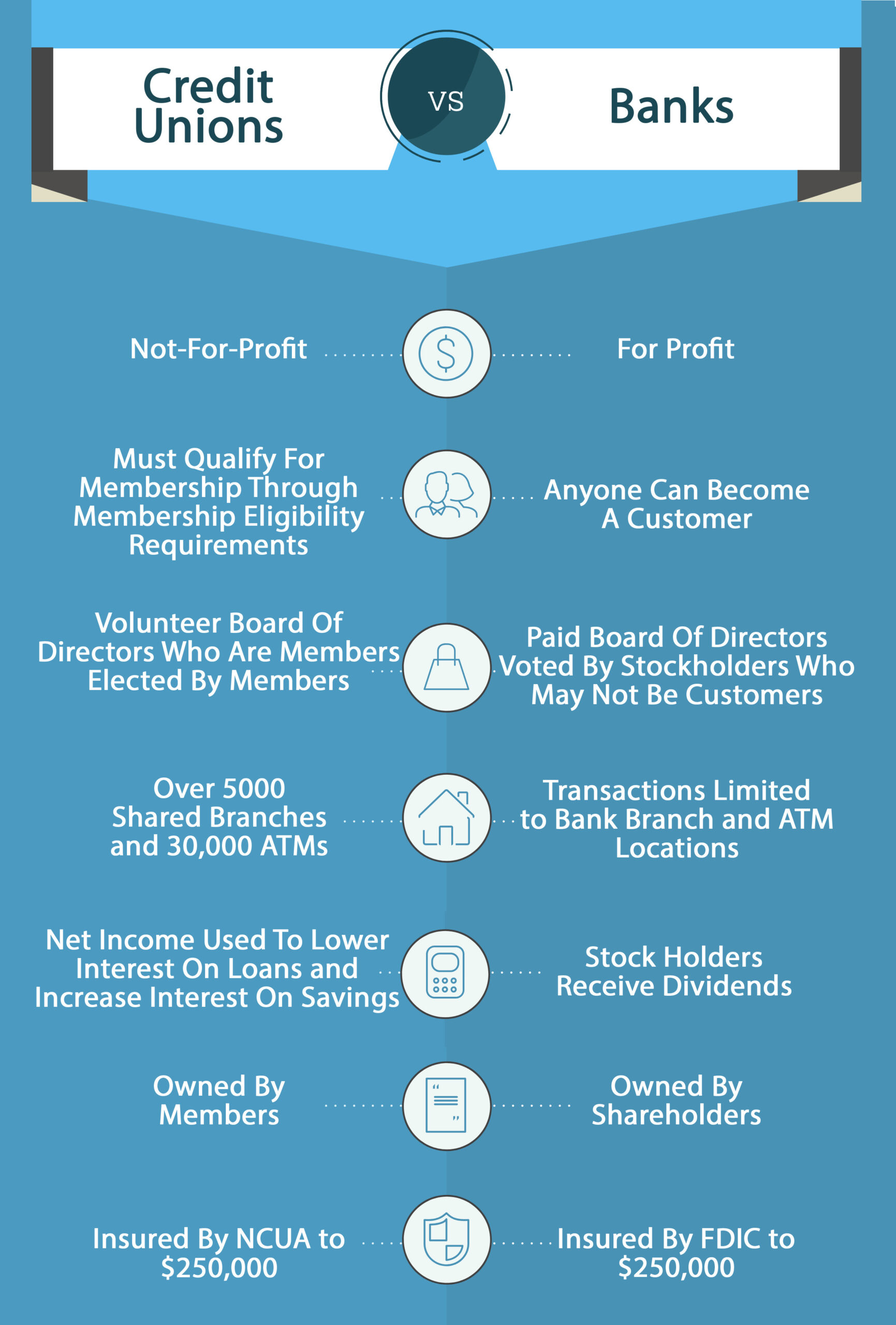
Banks vs. Credit Unions: Key Differences
Ownership and Purpose
Banks are for-profit institutions owned by shareholders. Their primary goal is to generate profit, which is returned to shareholders as dividends.
Credit unions, on the other hand, are not-for-profit organizations owned by their members. When you join a credit union, you’re not just a customer—you’re an owner.
Credit unions may have membership requirements based on where you live, work, or worship. These requirements help maintain a shared connection among members.
As a credit union, AGCU is committed to serving our members and the Assemblies of God by offering financial solutions that reflect shared faith and community values.