


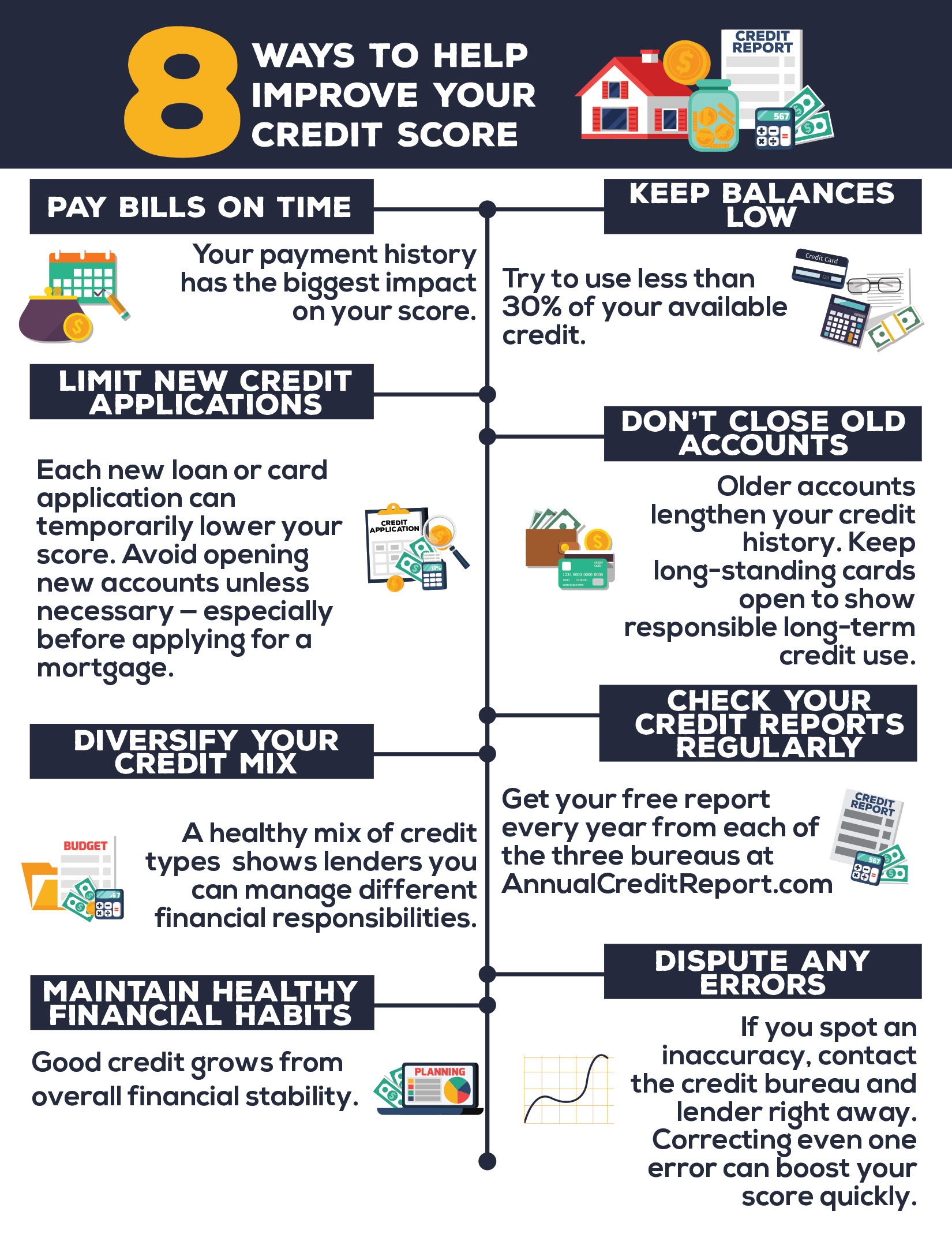
8 Ways to Help Improve Your Credit Score
Improving your credit score can make it easier — and cheaper — to borrow.
Building a strong credit history takes time. That’s why it makes sense to adopt good credit habits even if you aren’t planning to apply for new loans in the near future.
To help improve your credit, make sure to pay your bills on time and try to use only a portion of the total credit available to you. Following a budget, keeping emergency savings, and avoiding too much debt can also make it easier to care for your credit.
Keeping up a solid credit history and good credit score is a bit like staying in shape — you have to work at it regularly to stay at the top of your game. If you wanted to run a marathon, you wouldn’t wait to start training until it was a month away.
Similarly, you don’t want to neglect your credit until you’re about to apply for a major loan. Instead, try to incorporate good credit habits into your regular financial routines. That way, if or when you need to apply for new credit, you should already be in a stronger position.
1. Never Miss a Bill Due Date
Paying your bills on time is one of the most important habits for maintaining a good credit score. Your payment history — whether you’ve paid past credit card and loan bills on time — is typically one of the biggest factors in your credit score.
If you have trouble staying on top of due dates, consider:
- Enrolling in autopay when available
- Registering for billing alerts
- Creating calendar reminders or a personal reminder system
The best system is the one you’ll actually use consistently.
2. Keep Your Balances Low
If you have revolving credit, such as credit cards or a home equity line of credit, try to use only a portion of the credit available to you.
A commonly suggested guideline is to keep balances at or below 30% of your credit limit. For example, if you have a $10,000 credit limit, that would mean keeping the balance at or below $3,000.
This ratio is called credit utilization, and it is typically another important factor in your credit score. In general, using less of your available credit may help your score.
3. Think Twice Before Closing Old Cards
The average age of your credit accounts can also affect your credit score. A longer credit history can show lenders that you have experience managing debt responsibly.
That’s why it may make sense to keep older credit cards open, even if you don’t use them often. However, closing a card may still be the right choice if it charges an annual fee, creates a fraud concern, or tempts you to overspend.
4. Be Cautious About New Loan Applications
When you apply for a new credit card or loan, the lender will generally make a “hard inquiry” into your credit. Hard inquiries can temporarily lower your score and may stay on your credit report for up to two years.
You can reduce the impact by:
- Thinking carefully before opening new credit cards
- Avoiding new applications before applying for a major loan
- Submitting rate-shopping applications within a short time period when possible
Checking your own credit is not considered a hard inquiry and does not hurt your score.
5. Consider a Well-Rounded Credit History
A mix of credit types — such as credit cards, auto loans, mortgages, or home equity loans — may help strengthen your credit profile over time.
That doesn’t mean you should borrow money you don’t need. But if a new type of loan makes sense within your broader financial plan, it may also benefit your credit history.
6. Check Your Credit Report Regularly
Reviewing your credit report can help you catch errors, old balances, or signs of fraud before they become bigger issues.
When reviewing your report, watch for:
- Incorrect account details
- Payments reported late that you paid on time
- Overlooked past-due accounts
- Credit inquiries or accounts you don’t recognize
Consider checking one report every few months to keep regular tabs on your credit.
7. Dispute Any Errors You Find
If you find incorrect information on your credit report, take steps to have it corrected. This usually means filing a formal dispute with the credit reporting agency and contacting the creditor connected to the error.
The process may take time, but it can be worth the effort to make sure your credit history gives a fair and accurate picture of you as a borrower.
8. Keep Your Broader Finances in Shape
It can be easier to maintain a good credit score when the rest of your financial life is organized.
Helpful habits include:
- Following a budget
- Avoiding taking on more debt than you can manage
- Building emergency savings
- Using credit cards carefully and intentionally
Stick with these habits, and managing your credit may become a natural part of your financial routine.
Helpful AGCU Tools
Want to see how your financial fitness stacks up? AGCU offers calculators and tools that can help you review your budget, debt, savings, and loan options.
You can also learn more about strategies for paying down debt and managing credit responsibly.
Frequently Asked Questions
How long does it take to improve my credit score?
Building a strong credit history takes time and depends on your starting point. There’s no quick fix, but consistently paying bills on time and keeping balances low can help improve your score over time.
Will checking my own credit score hurt it?
No. Checking your own credit is not considered a hard inquiry and will not affect your credit score.
How do hard inquiries affect my credit score?
Hard inquiries happen when you apply for new credit. They may temporarily lower your score and can remain on your credit report for up to two years, though their impact usually lessens over time.
What’s the most important factor for my credit score?
Payment history is typically one of the most important factors. Even one missed payment can negatively impact your score, so reminders and autopay can be helpful tools.
What is credit utilization?
Credit utilization is the amount of available revolving credit you’re using. For example, if your credit limit is $10,000 and your balance is $3,000, your utilization is 30%.
Should I close old credit cards I don’t use?
In many cases, keeping older accounts open can help your credit history and utilization ratio. However, closing a card may make sense if it has an annual fee, creates a fraud risk, or encourages overspending.
What should I do if I find an error on my credit report?
File a dispute with the credit reporting agency and contact the creditor connected to the error. Keeping documentation can help support your case.
Do I need different types of loans to have good credit?
A mix of credit types can help, but it’s not worth taking on debt you don’t need. Payment history and credit utilization usually matter more.
Final Thought
Improving your credit score is a long-term process, but small, consistent habits can make a meaningful difference.
Pay on time, keep balances manageable, check your credit report, and build healthy financial routines that support your goals.